How Much Protein Do You Actually Need to Build Muscle?
Published July 27, 2026
For most people actively lifting weights, somewhere around 0.6 to 1 gram of protein per pound of bodyweight per day is the practical target, with the number scaling up toward the higher end for anyone specifically training to build muscle. That range lines up with major research reviews: the ISSN recommends about 0.65 to 0.9 grams per pound for most people who exercise, and a 2018 meta-analysis found extra muscle gains leveled off, on average, around 0.7 grams per pound. The top of the range builds in a margin, and it's most useful while eating in a calorie deficit.
Why the target depends on your goal, not just your weight
Bodyweight sets the baseline, but activity level and goal are what actually move the number. Someone who is mostly sedentary needs far less daily protein than someone training regularly, since there isn't much muscle tissue being broken down and rebuilt to begin with. Once regular training enters the picture, that demand goes up, and it goes up again for anyone specifically trying to add muscle rather than just maintain what they have. This is why a single flat number, like "eat this many grams," misses the point: the right target is a function of what the body is actually asking for, not a fixed constant for every person.
What protein is actually doing during muscle building
Resistance training stimulates muscle protein synthesis, the process of building new muscle proteins, and that process runs on amino acids, the building blocks protein breaks down into during digestion. Without enough protein coming in, that process has less raw material to work with, which limits how much muscle can actually be added over time, no matter how well-designed the training itself is. Training provides the stimulus; protein provides the material the body uses to respond to it. Both matter, and neither substitutes for the other.
Do you need a protein powder to hit these numbers?
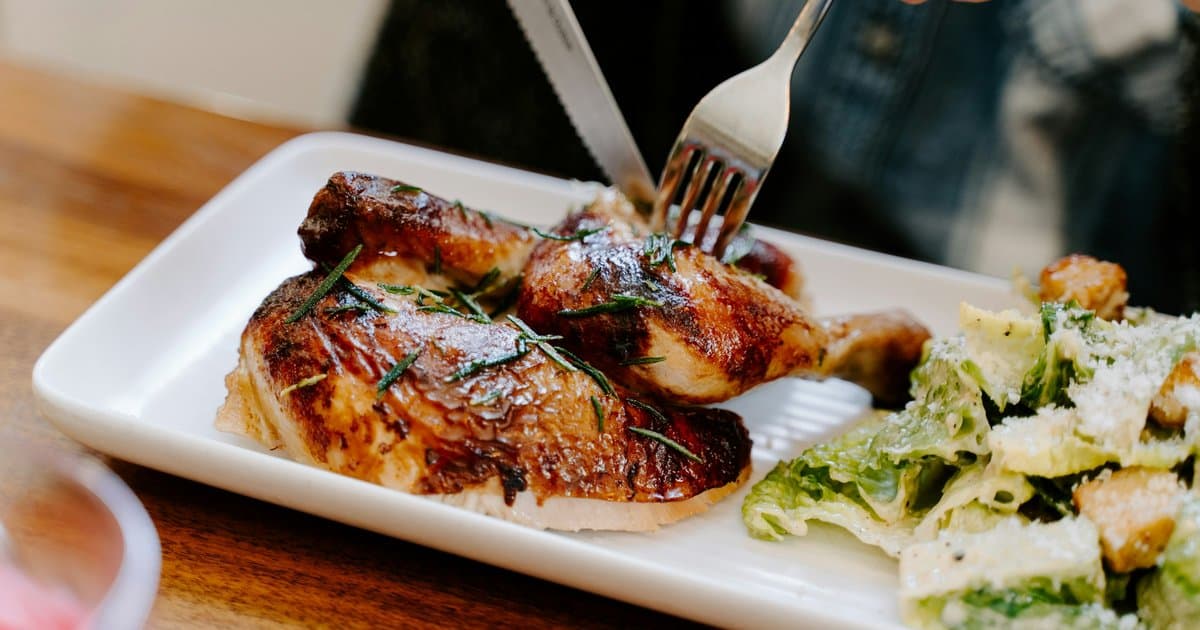
Not necessarily. A protein shake is a genuinely convenient way to add 20 to 30 grams of protein without cooking or planning a full meal, which matters on a busy day, but it isn't the only path to a daily target. Chicken breast, fish, eggs, Greek yogurt, cottage cheese, and legumes all provide substantial protein per serving, and a normal day of meals built around a few of these sources can reach the same daily total a shake would. Powder is a tool for convenience, not a requirement for progress.
Get your exact daily target
The protein calculator turns your bodyweight and goal into a specific daily gram target, rather than leaving it at a general range. If overall calorie intake matters just as much for your goal right now, the TDEE calculator is a good next stop.
Frequently asked questions
Does it matter when protein is eaten, like right after a workout?
Not nearly as much as total daily intake does. The idea of a narrow post-workout "anabolic window" that has to be hit within an hour or two has been largely overstated; what matters far more is hitting a consistent daily protein total, spread reasonably across a few meals rather than crammed into one.
Should protein intake change while losing fat?
If anything, it should stay the same or increase slightly, not drop. Protein needs generally hold steady or rise a little during a calorie deficit, since it helps protect existing muscle while the rest of the diet is supplying fewer total calories.
Is there a point where eating more protein stops helping?
Yes. Once daily intake is already in the recommended range for a given goal, adding significantly more protein doesn't translate into proportionally more muscle. Extra protein beyond that point is mostly just extra calories, not extra growth.
Is it possible to get enough protein from food alone, without supplements?
For most people, yes. Chicken, fish, eggs, dairy, and legumes can cover a daily protein target without any powder or shake. A protein supplement is a convenience for hitting a number on a busy day, not a requirement for reaching it.
Source
Jäger R, et al. "International Society of Sports Nutrition Position Stand: protein and exercise." Journal of the International Society of Sports Nutrition, 2017. Recommends 1.4–2.0 g/kg bodyweight/day for most people training regularly. Read the position stand ↗