Can You Build Muscle With Just Resistance Bands?
Published July 23, 2026
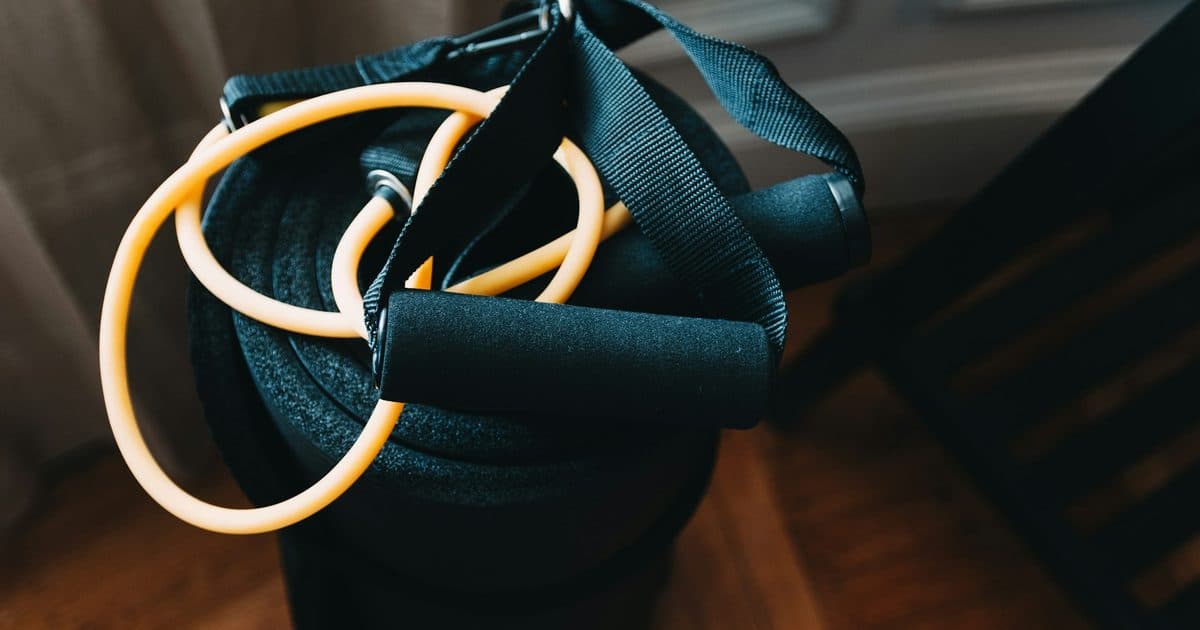
Yes. A muscle responds to being placed under sufficiently challenging tension and given a reason to adapt, and it doesn't distinguish between a barbell, a dumbbell, or a resistance band providing that tension. Bands do have real limitations worth understanding, mostly around how precisely you can track progress and how much load they can realistically provide for the biggest lower-body movements, but neither of those limitations rules out genuine muscle growth from training with bands alone.
How resistance bands create the tension muscles respond to
Free weights provide constant resistance throughout a movement, since a 20-pound dumbbell weighs 20 pounds at every point in the rep. Bands work differently: resistance increases as the band stretches further, so a movement can feel light at the start of the rep and genuinely difficult by the end. That variable resistance curve isn't a downgrade from free weights, just a different loading pattern, and it still places real, adaptation-worthy tension on the muscle, particularly through the second half of a rep where a lot of that tension concentrates.
What resistance bands can't fully replace
Two limitations are worth being upfront about. First, progress tracking is less precise: a dumbbell tells you exactly how much weight you lifted, while a band's resistance depends on how far it's stretched, its condition, and its labeled tension range, which varies somewhat between brands. Second, the heaviest compound lower-body movements, like a barbell squat or deadlift, are hard to fully replicate with band tension alone, since a strong lifter can usually generate more force than a home band set can resist. Neither limitation prevents muscle growth, but they do mean progress is tracked more by feel and by which band or combination of bands a movement requires, rather than by a printed number increasing every few weeks.
Building a full workout around bands
Bands cover chest, back, shoulders, biceps, triceps, and glutes well on their own, through movements like a resistance band chest press, resistance band row, face pull, band curl, tricep pushdown, and banded hip thrust. Quads, hamstrings, and core are usually better trained with bodyweight movements alongside bands, like bodyweight squats, lunges, and planks, rather than forcing a band into a role it isn't well suited for. Combining both in the same routine, rather than treating bands as the only tool, is how a genuinely complete muscle-building program gets built around minimal equipment.
GetFitArchitect's single workout and workout plan tools both support resistance bands as an equipment option, and will mix in bodyweight movements automatically to fill in whatever bands alone don't cover for a given day.
Not sure which bands are worth buying?
The resistance bands buying guide breaks down loop bands versus tube bands, what resistance range actually matters, and specific picks at three price tiers.
See the resistance bands guideFrequently asked questions
Do bands need to get heavier over time to keep building muscle?
Yes, the same way any other form of resistance training works. A band that felt hard in month one will eventually feel easy once the muscle adapts, and that's the signal to move to a heavier band, stack a second band on top of the first, or add more reps and sets. Progress stalls when the resistance stays the same indefinitely, not because bands stopped working.
Are loop bands or tube bands better for building muscle?
They're suited to different movements rather than one being better overall. Loop bands work well for glute and hip work worn around the limbs, while tube bands with handles and a door anchor open up pressing and pulling movements, like rows and chest presses, that loop bands can't do well. A well-rounded routine benefits from having access to both.
How long before someone sees results training with just bands?
On a similar timeline to any other beginner-friendly resistance training approach, usually some noticeable strength improvement within a few weeks and visible muscle changes over two to three months of consistent training. What matters most is training close to muscular fatigue on each set and increasing resistance as the current level gets easier, not the specific equipment used to get there.
Should bands eventually be combined with other equipment?
Not necessarily, but many people choose to once they outgrow their current band set or want more precise, printed-weight progression. Bands remain useful even after other equipment is added, especially for warm-ups, assisted pull-ups, and joint-friendly accessory work. There's no requirement to move past them if they're still providing enough of a challenge.